Integrating Registration Flows With Flexible Funding Sources And Proactive Support In Live Betting Arenas
Finley Hartmann · Oct 31, 2026

Integrating Registration Flows With Flexible Funding Sources And Proactive Support In Live Betting Arenas
Account creation in live wagering environments begins with basic verification steps that platforms connect directly to diverse funding channels, allowing users to move from registration into active betting without extended delays. Operators design these sequences so identity checks feed into deposit interfaces, where options like bank transfers, digital wallets, and card payments appear immediately after profile completion. Research from the New Jersey Division of Gaming Enforcement shows that platforms using this linkage experience faster session starts during peak live events, since data entered at signup pre-populates funding fields automatically.
Account Setup Sequences And Their Ties To Payment Variety
Users enter personal details, confirm identity through documents or biometrics, and receive account activation that unlocks several funding routes at once. Those who've studied platform architectures note how email or phone verification triggers menu displays of credit cards, e-wallets, cryptocurrency options, and local bank methods, each calibrated for real-time processing. Data indicates that when registration pipelines incorporate these channels early, transaction success rates rise because users select preferred methods before placing initial wagers. In October 2026 observers tracked increased adoption of instant funding tools across multiple jurisdictions, with platforms reporting smoother transitions from signup to live odds engagement.
Responsive Assistance Embedded In The Onboarding Path
Customer support integrates at every stage of account creation, offering chat or call options that address funding questions as they arise. Platforms position these tools within the registration dashboard so users encountering payment selection issues receive immediate guidance without leaving the flow. Figures from industry reports reveal that assistance availability during signup reduces abandonment rates, particularly when live wagering windows open and users need quick deposits. Agents trained on both verification protocols and funding mechanics provide tailored responses, connecting account details to specific channel requirements like minimum deposit thresholds or currency conversions.
Live Wagering Dynamics That Rely On Connected Systems
Once accounts activate and funds clear, live betting environments demand continuous access to odds updates and quick adjustments, all supported by the initial connections made during registration. Platforms maintain these links so that funding channels remain active for in-play deposits, while assistance teams monitor sessions for any friction points. What's interesting is how data flows from signup through to ongoing support, allowing operators to flag potential issues like failed transactions before they interrupt live wagers. A study of platform integrations found that unified systems deliver higher retention because users move fluidly between account management, deposits, and support requests without separate logins or redirects.
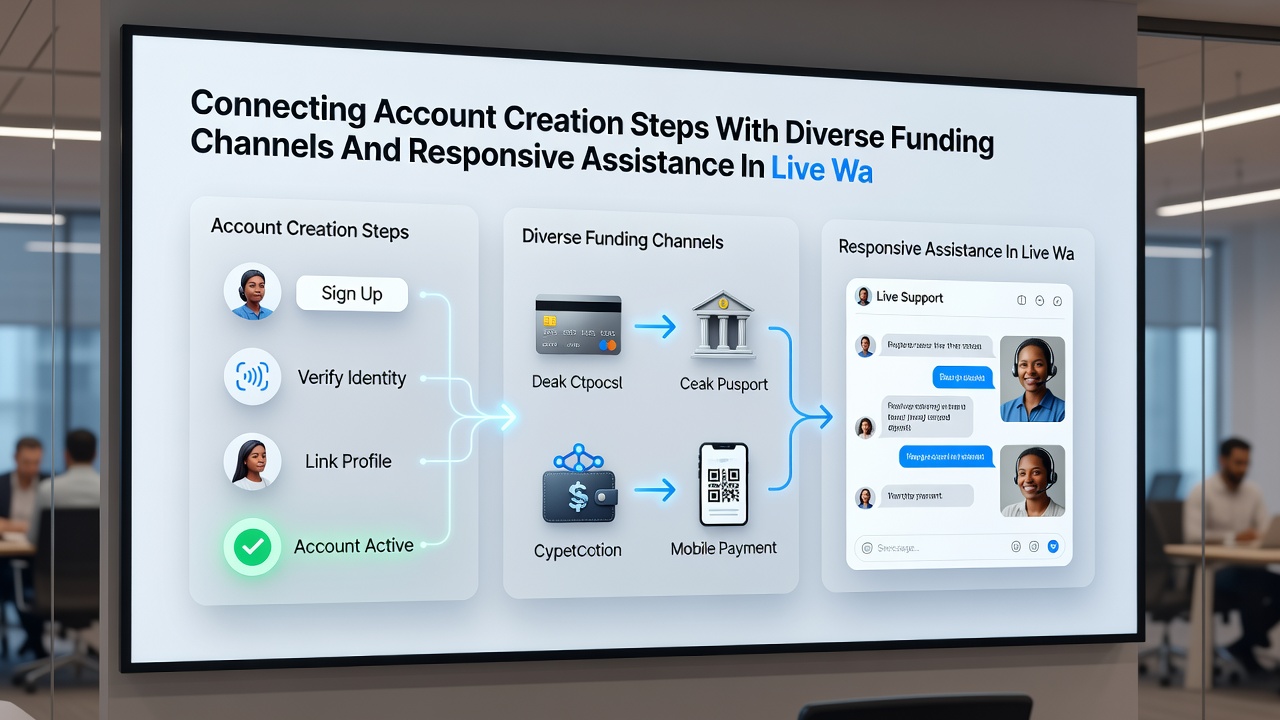
Take one operator who aligned verification steps with multi-channel payments and always-available help desks. Their setup allowed users to complete registration, select a preferred wallet, and receive real-time confirmation during major sports events. Those patterns appear across markets where regulatory frameworks encourage such linkages, and platforms adapt them to handle volume spikes without service drops.
Technical Connections That Support Diverse Funding During Live Sessions
Backend systems route account data directly to payment processors, enabling instant validation and balance updates that keep pace with changing live odds. Experts have observed that when these connections include fallback options, like switching from card to wallet mid-session, users maintain momentum. Responsive assistance extends this capability by stepping in for edge cases such as regional payment restrictions or verification follow-ups. Reports from the Australian Communications and Media Authority highlight how jurisdictions tracking these integrations note improved compliance and user satisfaction metrics, since support teams resolve issues tied to the original account creation choices.
Platforms also embed educational prompts during funding selection, guiding users toward methods suited to live wagering speeds. This approach connects the signup process to practical outcomes, where quick deposits translate into active participation without pauses. Observers note steady growth in hybrid models that combine automated verifications with human oversight, ensuring funding channels operate reliably even under high demand.
Conclusion
The linkage between account creation, varied funding channels, and responsive assistance forms a core structure for live wagering platforms. Data from multiple sources shows these elements working together to shorten entry times and sustain activity once users engage with dynamic events. As systems evolve in October 2026 and beyond, the focus remains on maintaining those connections so that registration leads smoothly into deposits and support remains available at every point.